![]() |
The University of Kentucky's Eden Shale Research and Demonstration Farm |
"The land was so rundown that a rabbit passing through had to carry his dinner."
That was a description of the Eden Shale Farm 45 years ago, when 950 acres of land was turned over to the UK College of Agriculture and the Ky. Agriculture Experiment Station to be operated as an experimental farm.
The farm has a fascinating history. It’s genesis dates back to 1953 when farmers in the 33-county Kentucky area in which the Eden series of soil predominates, came up with a proposal to establish a demonstration farm that would find answers to problems unique to the land in the area.
Two years later, individuals and groups, mostly from the Eden Shale region, had raised $65,000 to purchase five farms that were combined into one - and turned over to the College of Agriculture and Experiment Station to do the "answer finding." The land became known as the College of Agriculture’s Eden Shale Farm.
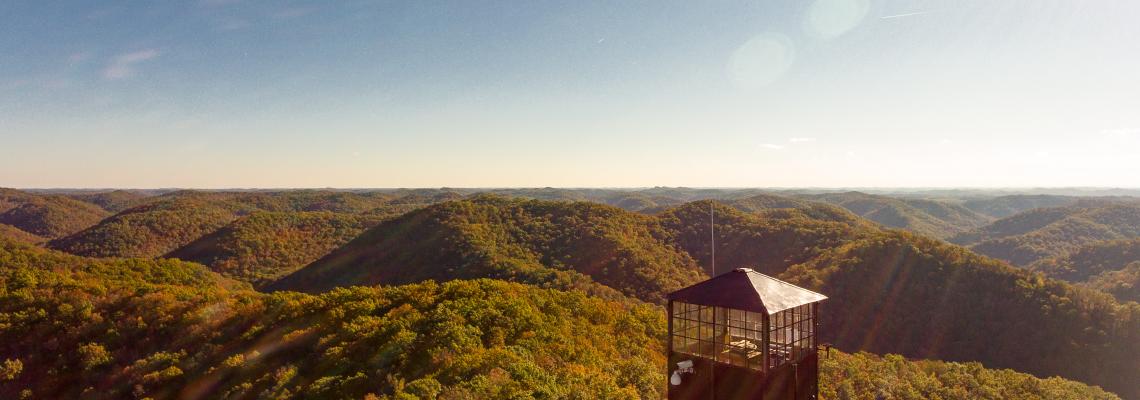
As you drive by the farm now, you’ll see a shining example of what can be done to build and develop marginal land into a productive, beautiful farm. "Where slopes and valleys have become Kentucky’s 'Garden of Eden’," is largely a result of the efforts of O.D. Hawkins, (see the Kentucky Farm Bureau press release) the original farm manager who was responsible for turning this "briar patch" into lush, rolling farmland.
|
Where slopes and valleys have
become Kentucky's "Garden of Eden." - from statewide news release in late 1970's |
Research at the farm over the years has focused on dealing with the highly infected tall fescue that is the dominant forage on the farm. The fescue was established in the late 1950's or early 1960's, and it was soon discovered that animals did not perform well on the pastures. The exact cause was a mystery until the discovery of the endophyte of tall fescue in the 1970's.
UK decided to keep the highly infected tall fescue and develop the farm research around it. I believe that this decision has been key to the value of Eden Shale research.
Over the years, Eden Shale has been part of several innovative research projects. It has had an orchard, and had the first you-pick strawberry operation in the state. It was also the site of the first Christmas tree farm in Kentucky.
Eden Shale, under the direction of Joe Wyles for the past 20 years, has been the site of forage experiments on bermudagrass (which winterkilled, by the way) and the ability to get various legumes to reseed under grazing. It was the home of the UK Central Bull Test for 19 years. Wyles has been an integral part of all of these enterprises, and his knowledge and experience, along with that of the Eden Shale farm crew, has been one of the reasons why, when a UK researcher wants something done right, he or she thinks of Eden Shale Farm.
The farm has been upgrading the quality of their commercial cow herd through A.I. breeding and by using the best bulls they can afford. They have always backgrounded their calves through the winter and then turned them out on spring grass. These heavy calves were then sold in mid-summer as the grass growth slowed.
Some
fescue pastures are almost always rested and fertilized to prepare for fall
stockpiling. In 1997 and 1998, calves were able to graze tall fescue throughout
the winter with only a minimum of hay feeding.
The forage research activities have accelerated over the past 10 years. The Eden Shale farm is now home to official UK variety tests on alfalfa, red clover, and the perennial cool season grasses. An alfalfa trial on the farm helped to unlock the puzzle of why some spring seedings fail (aphanomyces root rot). This finding has helped form UK recommendations for the entire state.
There are also yield trials on timothy, tall fescue, and orchardgrass on the farm. Eden Shale is the only location outside of Lexington where grazing tolerance studies on cool season grasses are conducted.
Legume establishment has been a research focus for several years at Eden Shale. Recently, a two year study was completed on overseeding alfalfa, red clover, annual lespedeza, and a red clover-annual lespedeza mix into tall fescue sod. The red clover and annual lespedeza treatments did well, but alfalfa failed to establish well in either year.
Recent Research Results:
|
|
Improved Alfalfa Stands Result from Knowledge of a Root Rot Fungus |
|
|
Alfalfa Variety Report |
|
|
Red Clover Variety Report |
|
|
Early Weaning Experiment |
|
|
Grape Variety and Training System Trial |
| Try Your Luck at Our
Quiz:
|